Layered Dressing: How to Dress to Stay Warm Without Overheating

The essence of layering clothing lies in properly combining garments according to the temperature and circumstances.

It is important to use technical fabrics with necessary properties such as moisture-wicking, water resistance, and windproofness.

The right combination of layers will ensure comfort in any conditions — we guarantee it.

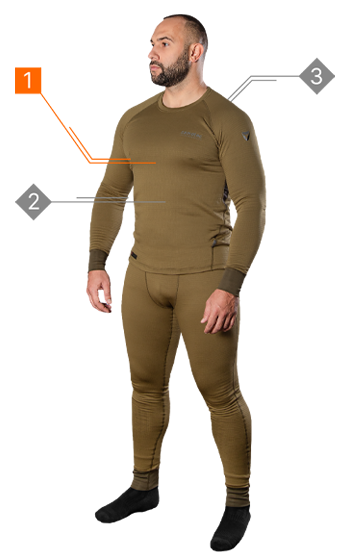
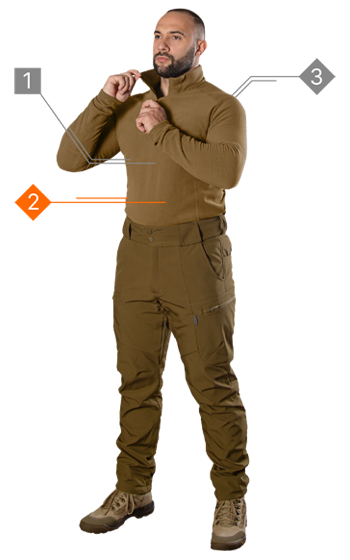
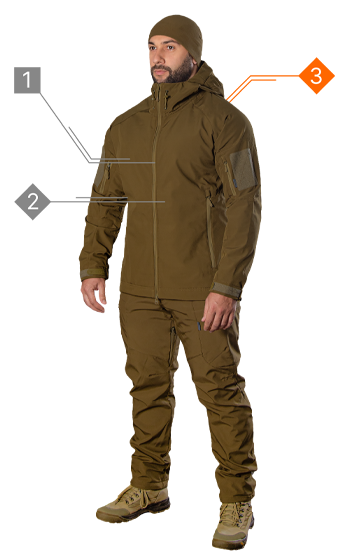
1. Basic2. Medium3. Protective

1. Basic. Moisture-wicking layer

The first layer fits directly against the body. Its main task is to quickly absorb and wick away moisture, keeping the skin dry. This helps prevent overheating, which can lead to hypothermia.

Temperature and Activity Level Recommendations:

1.1 Temperature +10°C - +15°C, active movement:
Active thermal wear and long sleeves with moisture-wicking functionality (CoolTouch, Coolpass). In the warm season, combined with 2.2 (nylon jacket with insulation).

1.2 Temperature +5°C - 10°C, active movement:
Thermal underwear lvl1+ with a soft brushed interior. Wicks moisture during activity in moderately cool weather, keeping the body dry and slightly warm.
Combination: with 2.1 (fleece) and outer layer 3.1 (SoftShell) for temperatures from +5°C to -10°C.

1.3 Temperature -10°C - -25°C, moderate movement or static activity:
Polarheat thermal underwear lvl2 — elastic and warm, actively wicks moisture and retains heat.
During active movement, it wicks moisture more slowly than lvl1+ thermal underwear but retains heat better, making it ideal for cold weather and static activities.

View product

2. Medium. Insulating layer

The main task of this layer is to retain the maximum amount of heat and create a comfortable microclimate. It has several levels that can be combined under extreme conditions.

This layer is also divided into levels, depending on the functionality of the items and temperature conditions:

Temperature from +5°C to -15°C, active movement

A fleece jacket made from innovative fabrics (Himatec, Shu-fleece) provides reliable thermal insulation and wicks moisture to the outer layers. The main goal is to keep warm and complement the base layer.

Combinations:

  • With lvl1+ (1.2) thermal underwear and SoftShell jacket (3.1): +5°C to -10°C.
  • With Polarheat lvl2 (1.3) thermal underwear and SoftShell jacket (3.1): -5°C to -15°C during active movement.

Temperature from -10°C to -25°C, moderate activity

We recommend using lightweight nylon down jackets and vests with insulation as a supplement to 2.1 (fleece) for static activities and extreme temperatures.

Combinations:

  • Fleece (2.1) + Polarheat lvl2 (1.3) thermal underwear + winter jacket or suit (3.2): -10°C to -25°C.
  • As a standalone item + lvl1+ (1.1) thermal underwear: +10°C to +15°C.
View product

3. External. Protective layer

The main task is to protect against weather conditions (rain, snow, wind). It has two levels.

Temperature from +5°C to -20°C, active movement.

Membrane clothing or clothing with moisture and windproof functionality. Blocks bad weather and wicks moisture away from the inner layers.

In our range — mid-season membrane clothing made from SoftShell material.

Combinations:

  • Membrane clothing (3.1) + fleece (2.1) + thermal underwear lvl1+ (1.2): +5°C to -10°C.
  • Membrane clothing (3.1) + nylon jackets with insulation (2.2) + fleece (2.1) + Polarheat thermal underwear lvl2 (1.3): -10°C to -20°C.

Temperature from -10°C to -25°C, moderate activity

Winter jackets, pants, and suits. This is a moisture and windproof layer with insulation, suitable for extreme weather conditions and static situations.

Combination:

  • Winter jackets (3.2) + nylon jackets with insulation (2.2) + fleece (2.1) + Polarheat thermal underwear lvl2 (1.3): -10°C to -25°C during active movement.
View product